How Smokeless Fire Pits Work and Why They Still Feel Like Real Fire
Smoke is often the one thing that spoils a good outdoor fire. If you are asking how does the smokeless fire pit work, the answer is simple: it uses clever airflow to burn wood more completely, so you get real flames with dramatically reduced visible smoke. You still get the crackle, glow and warmth of a wood fire, just with a cleaner burn that is easier to sit around.
A smokeless fire pit is not smoke-free magic. It is a smarter fire pit design. Air enters through the base, warms inside a double wall, then feeds the upper flame so smoke particles can reignite before they drift away.
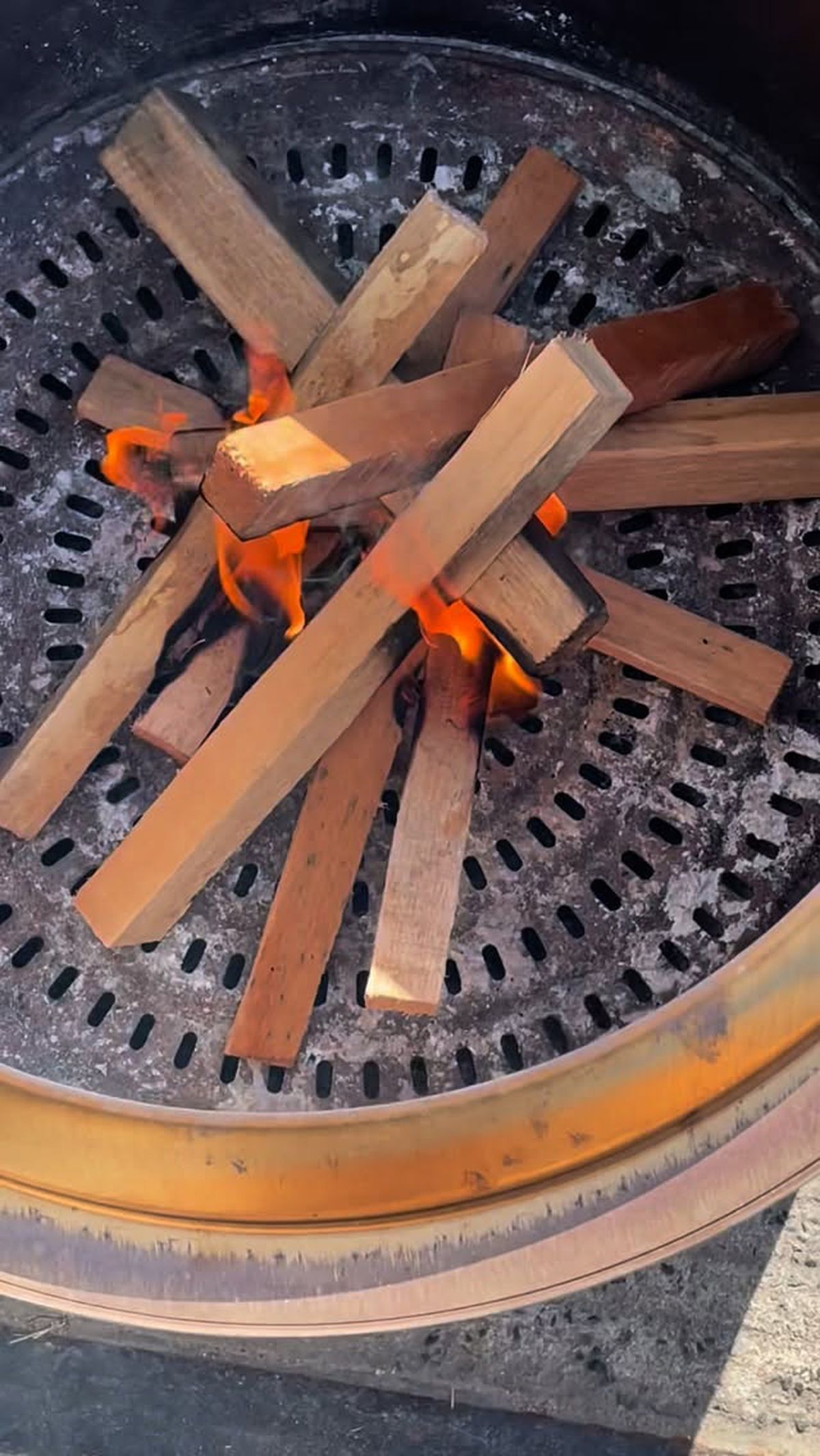
The quick answer: hotter air burns smoke twice
A normal open fire burns wood and lets a lot of smoke rise straight out of the flames. A smokeless fire pit changes that by controlling where the air goes. It pulls oxygen in from below and sends preheated air back into the top of the burn chamber.
That second burst of hot air creates secondary combustion. In plain language, the fire gets another chance to burn the smoke and wood gases that would usually escape. The result is reduced visible smoke, cleaner flames, more consistent heat and often less ash residue, depending on the wood and how the fire is used.
What happens inside the fire pit
The easiest way to understand how do smokeless fire pits work is to picture air moving in two layers. One stream feeds the fire from below. Another stream travels through the wall of the pit, heats up, and exits near the top where the smoke is rising.
Step 1: Air enters through the base
Fresh air enters through the base or lower vents of the fire pit. This feeds oxygen to the wood from underneath, which allows the fire to build heat more steadily than a loose pile of wood on the ground.
Good airflow is important because fire needs oxygen to burn properly. If the lower air path is blocked by ash, debris or too much wood packed into the chamber, smoke is more likely to appear.
Step 2: The double wall warms the air
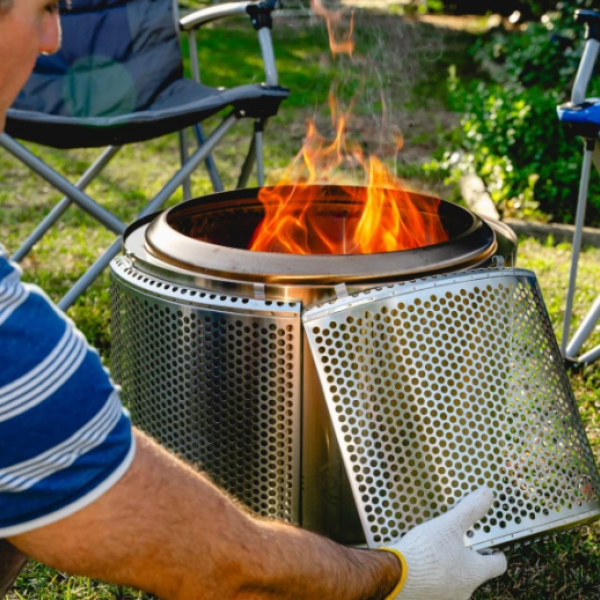
The double-wall airflow is the clever part. As the fire burns, air travels through the space between the inner and outer walls of the pit. The heat from the fire warms that air before it reaches the top openings.
Hot air is more useful than cold air at this stage. It gives the upper flame the heat and oxygen it needs to burn more of the smoke before it leaves the fire pit.
Step 3: Smoke particles reignite near the top
Near the top of the burn chamber, the heated air meets rising smoke and wood gases. This is where secondary combustion takes place. You may see small flames curling around the inside edge of the fire pit when the second burn is working well.
Instead of letting those particles drift into your seating area, the fire burns more of them inside the pit. That is what gives a well-running smokeless pit fire its cleaner, brighter flame pattern.
Are smokeless fire pits really smokeless?
Are smokeless fire pits really smokeless? Not in every condition. Smokeless means dramatically reduced smoke, not magic.
You are still burning real wood, so some smoke can appear when the fire is first lit, when the wood is damp, or when wind pushes smoke sideways before it can burn again. The difference is that once the fire is hot and the airflow is working properly, the smokeless design reduces the visible smoke you would usually get from an open fire.
Why it still feels like a proper wood fire
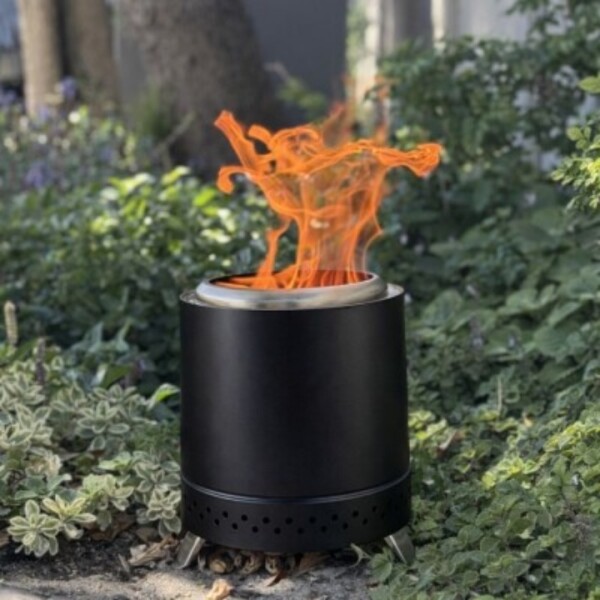
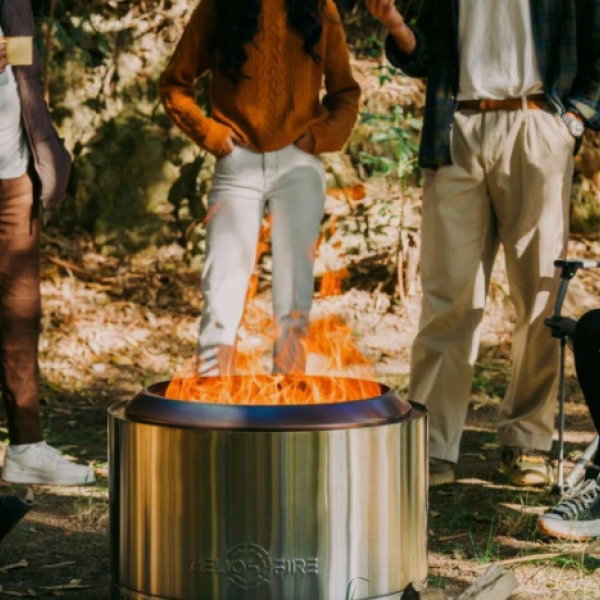
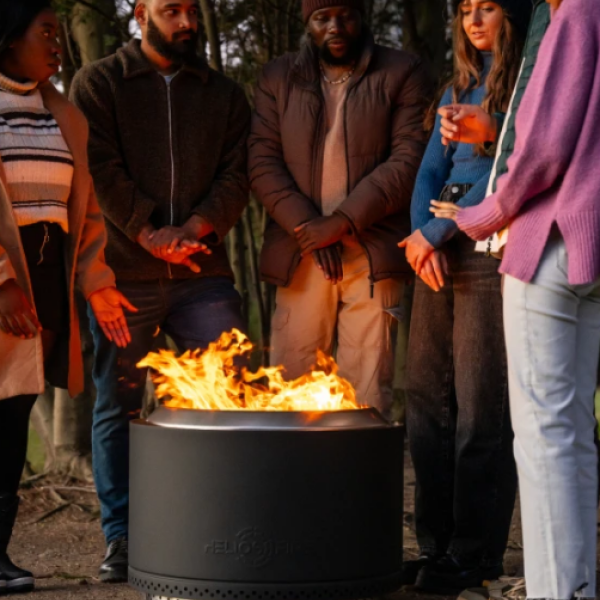
A smokeless fire pit does not take away the best parts of fire. You still get real flames, real warmth and that easy outdoor atmosphere that makes people pull their chairs closer. The design simply gives the fire better conditions to burn cleanly.
That is why it works well for patios, gardens and campsite evenings where the mood matters as much as the heat. You are not swapping the fire experience for a gadget. You are choosing a smarter way to enjoy it.
How to get less smoke from a smokeless fire pit
The fire pit design does a lot of the work, but the way you use it matters. Wood quality, airflow, lighting method, wind and cleaning all affect how cleanly the fire burns.
-
Use dry, seasoned wood where possible.
-
Keep the lower vents and air holes clear.
-
Avoid packing too much wood into the burn chamber.
-
Give the fire time to build heat before expecting the cleanest burn.
-
Remove excess ash once the pit is fully cool.
Dry wood makes a visible difference
Damp or green wood creates more smoke because the fire has to drive out moisture before the wood can burn properly. That moisture cools the fire and slows down the cleaner second burn.
Dry wood burns hotter and gives the airflow system a better chance to do its job. If your fire is smoking more than expected, the wood is one of the first things to check.
Clear airflow keeps the burn steady
A smokeless design relies on moving air. If ash or debris blocks the lower vents, the fire cannot pull in enough oxygen from below. If the burn chamber is overloaded, airflow through the wood can also become restricted.
Keep the air paths open and follow the care guidance for your specific fire pit. Cleaning should only happen once the pit is completely cool and safe to handle.
A hotter start gives a cleaner burn
A smokeless fire pit usually burns cleanest once the chamber is hot. During lighting, some smoke is normal because the wood has not yet reached the temperature needed for strong secondary combustion.
Use a safe lighting method recommended for your fire pit and avoid anything unsuitable for an open flame. The aim is a steady build-up of heat, not a rushed or risky start.
Wind can change the experience
No outdoor fire is immune to wind. A strong breeze can push smoke sideways or interrupt the airflow pattern inside the pit. If the smoke keeps moving in one direction, the weather may be the reason rather than the fire pit itself.
Choose a sensible outdoor position with good ventilation and enough clearance around the fire. Always use open flames with care and in a suitable outdoor setting.
Why there is often less ash
A hotter, more complete burn can leave less ash than a loose open fire. More of the wood is burned during the main flame and the secondary burn, so there may be less residue once everything has cooled.
There will still be ash to remove. Think of less ash as a useful part of a cleaner-burning fire, not a reason to skip normal maintenance.
Common questions about smokeless fire pits
How do smokeless fire pits work differently from normal fire pits?
A normal fire pit lets smoke rise directly from the wood. A smokeless fire pit uses controlled airflow and secondary combustion to burn more of those smoke particles before they leave the chamber.
Why is my smokeless fire pit smoking?
The most common reasons are damp wood, blocked air holes, excess ash, poor airflow, too much wood in the chamber or strong wind. Smoke can also appear during lighting before the pit is hot enough for the second burn to become effective.
What wood works best in a smokeless fire pit?
Dry, seasoned wood is usually the better choice because it burns hotter and cleaner than damp wood. The drier the fuel, the easier it is for the smokeless airflow system to reduce visible smoke.
Does a smokeless fire pit make no ash?
No. A cleaner burn may leave less ash, but ash is still a normal part of burning wood. Remove it safely once the fire pit is completely cool.
Does wind affect a smokeless pit fire?
Yes. Wind can move smoke sideways and disturb the clean airflow inside the burn chamber. A sheltered but well-ventilated outdoor position usually gives a more comfortable fire experience.
A smarter fire, not a fake fire
A smokeless fire pit is still built around real wood and real flame. The difference is the airflow. Air enters through the base, heats inside the double wall and returns near the top to reignite smoke particles.
That is the practical answer to how does the smokeless fire pit work. It is clever fire design, not a trick. With dry wood, clear airflow and basic care, you can enjoy a cleaner-burning outdoor fire with less smoke and the same gathering-around-the-flames feeling.
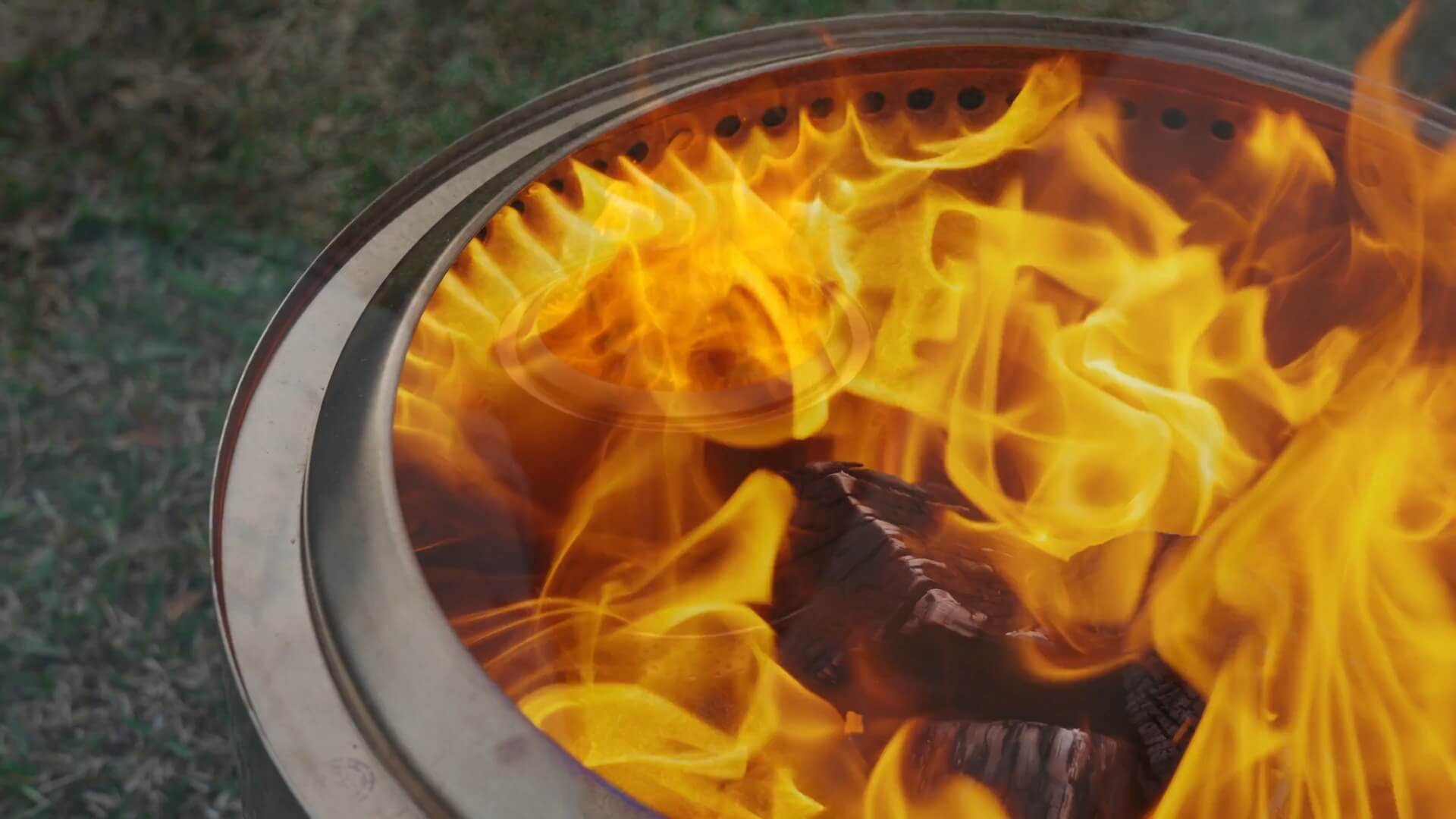
Explore a cleaner way to enjoy real fire
If you like the warmth and atmosphere of a wood fire but want a more comfortable outdoor gathering space, explore Helios Fire smokeless fire pits. They bring together real flames, clever airflow and reduced visible smoke for outdoor moments that are easier to settle into.
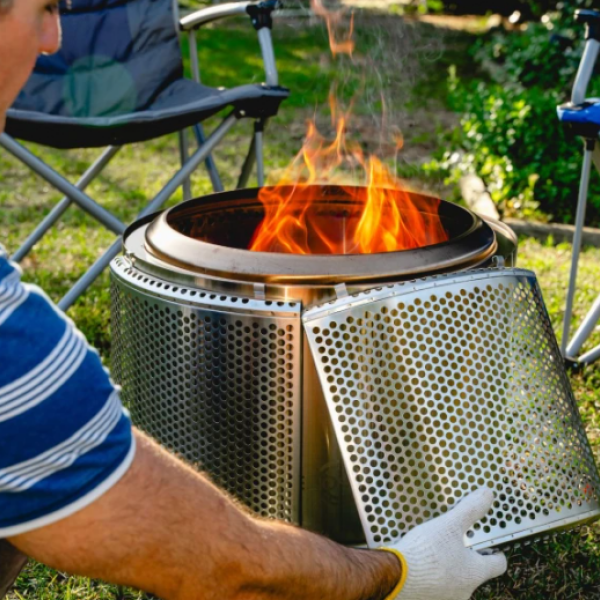

.jpeg "How to Cook Outdoors with a Smokeless Fire Pit")
_(1).jpeg "Apollo vs Eros Which Smokeless Fire Pit Is Right for You")
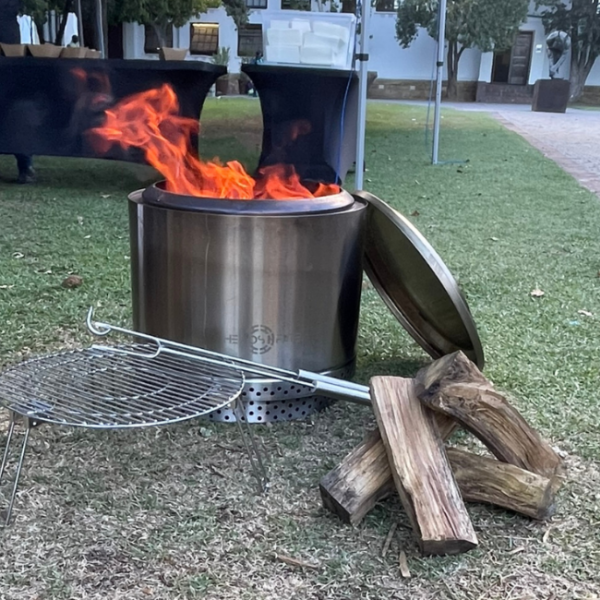
.jpeg "The Best Fire Pit Accessories to Upgrade Your Outdoor Setup")